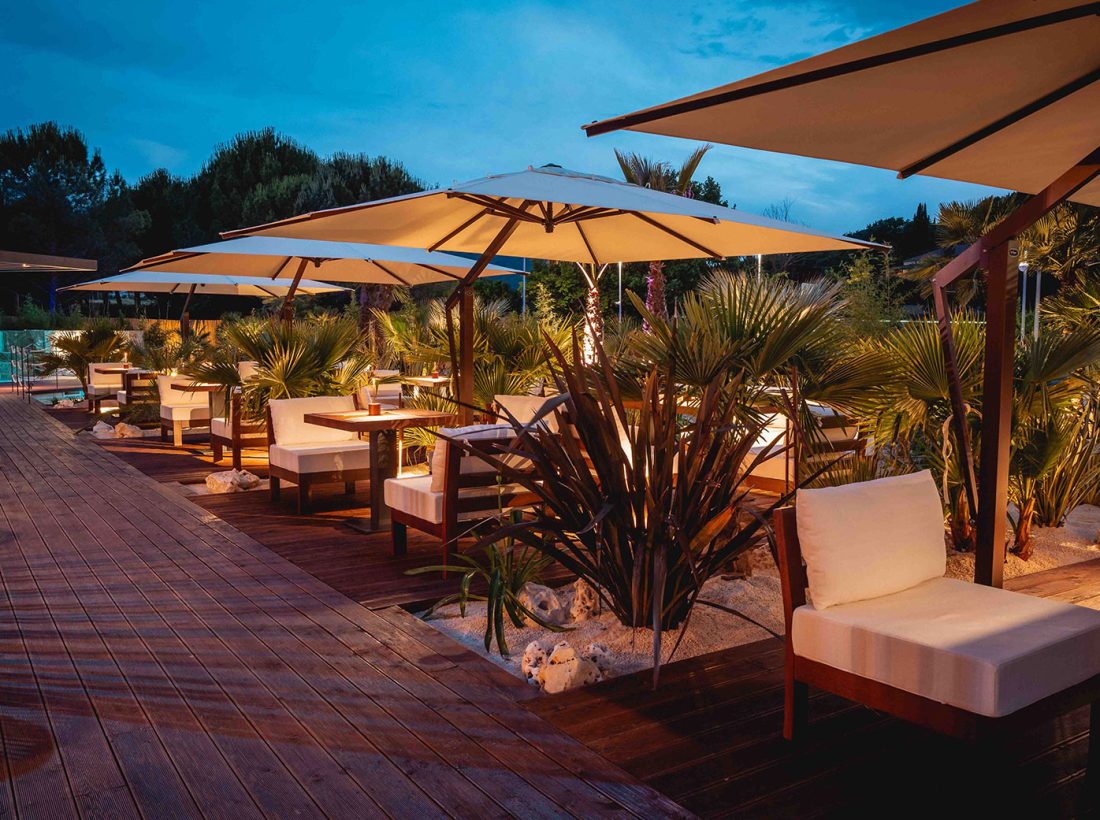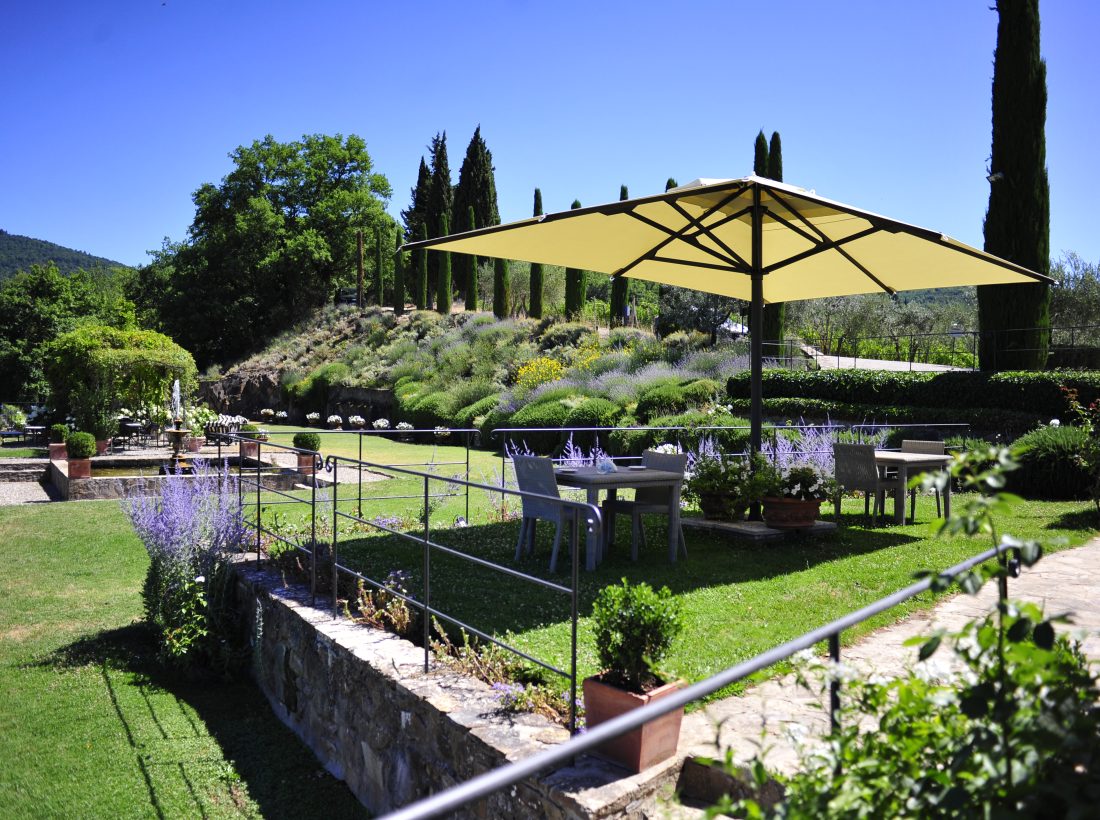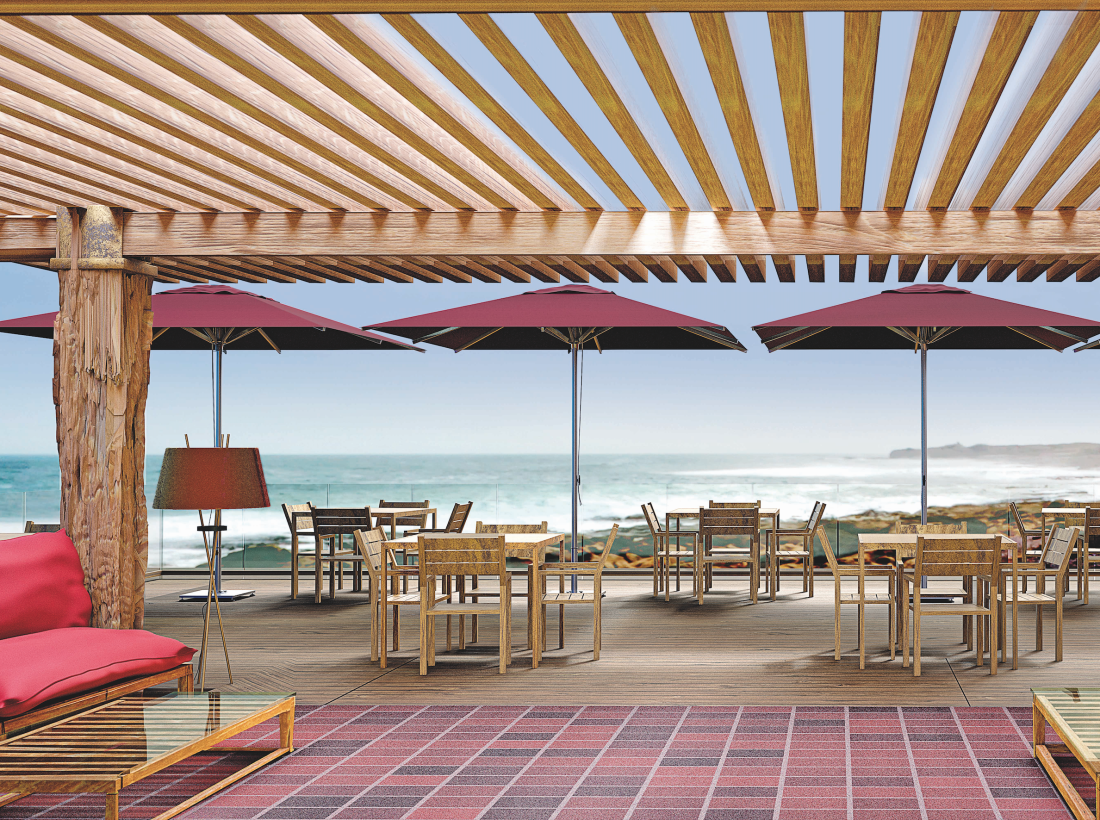
How can an outdoor umbrella be sustainable?
What does it really mean to talk about sustainability in outdoor design?
The most immediate answer often leads to materials, production processes, and what happens to a product at the end of its life. These are essential aspects, but they are not the only ways to look at sustainability.
An outdoor space is defined not only by what it contains, but also by how it is designed, used, and experienced over time.
An umbrella is designed to provide shade, but its role can extend beyond simple protection from the sun. When integrated into the right setting, a shading system can influence the conditions of a space, enhance comfort, and even play a role in how a building manages heat.
This opens up a broader reflection on sustainable outdoor design. A perspective that shifts the focus from the sustainability of a single object to the sustainability of the environment that object helps create.
So, what does it mean to design a more sustainable outdoor space today? And how can we rethink sustainability when it comes to the places we live, gather, and spend time outdoors?
The Poggesi Manifesto for more sustainable outdoor design
Shade is one of the simplest resources we have at our disposal. It requires no energy to create and, when thoughtfully designed, can significantly change how a space feels and functions.
A shading system can limit direct exposure to the sun across paving, surfaces, and façades, helping to reduce heat build-up. When shading extends to areas around a building, it can also help limit the amount of heat transferred indoors.
Under certain conditions, the result can be a reduced need for air conditioning to maintain indoor comfort.
This is not about replacing air conditioning with an outdoor umbrella, or assigning a single element a role that belongs to a much broader design strategy. It is about considering how many opportunities there are to manage heat before having to correct it artificially.
And perhaps this is where sustainable outdoor design becomes particularly interesting:
- in the conditions we are able to create;
- in what we can avoid consuming;
- in the role an object can play within a larger space.
Shade, then, becomes more than protection from the sun. It can become a design choice, a source of comfort, and, in certain situations, a small strategy for reducing reliance on mechanical cooling.
Sustainability is also about longevity
There is another dimension of sustainability that deserves attention: time.
We are used to thinking about sustainability mainly in terms of where materials come from and what happens to a product at the end of its life. But there is another question that matters just as much: how long can what we choose continue to serve us?
In outdoor spaces, where weather and everyday use constantly put products and materials to the test, designing for longevity starts with designing carefully. Quality construction, maintenance, the ability to replace individual components, and the flexibility to adapt to changing needs can all help extend the life of a space and everything within it.
Aesthetic choices are part of this reflection too. A design tied too closely to a passing trend can quickly feel outdated. A project that can work across different architectural styles and settings, on the other hand, can remain relevant over time.
This may be one of the most tangible forms of sustainability we can apply to design: creating something that does not need to be replaced simply because needs or trends have changed. Read about the philosophy behind Poggesi parasols here.
Shade is also a matter of urban design
So far, we have looked at outdoor spaces primarily as private environments. But shade does not belong only to gardens and residential patios. It belongs to the city, too.
Rising temperatures are changing the way we experience urban environments. A sun-exposed plaza or terrace without shelter can become difficult to use during the hottest hours of the day. By contrast, even a relatively small shaded area can dramatically change how a space feels.
This raises an interesting question: how important is shade to the design of the contemporary city?
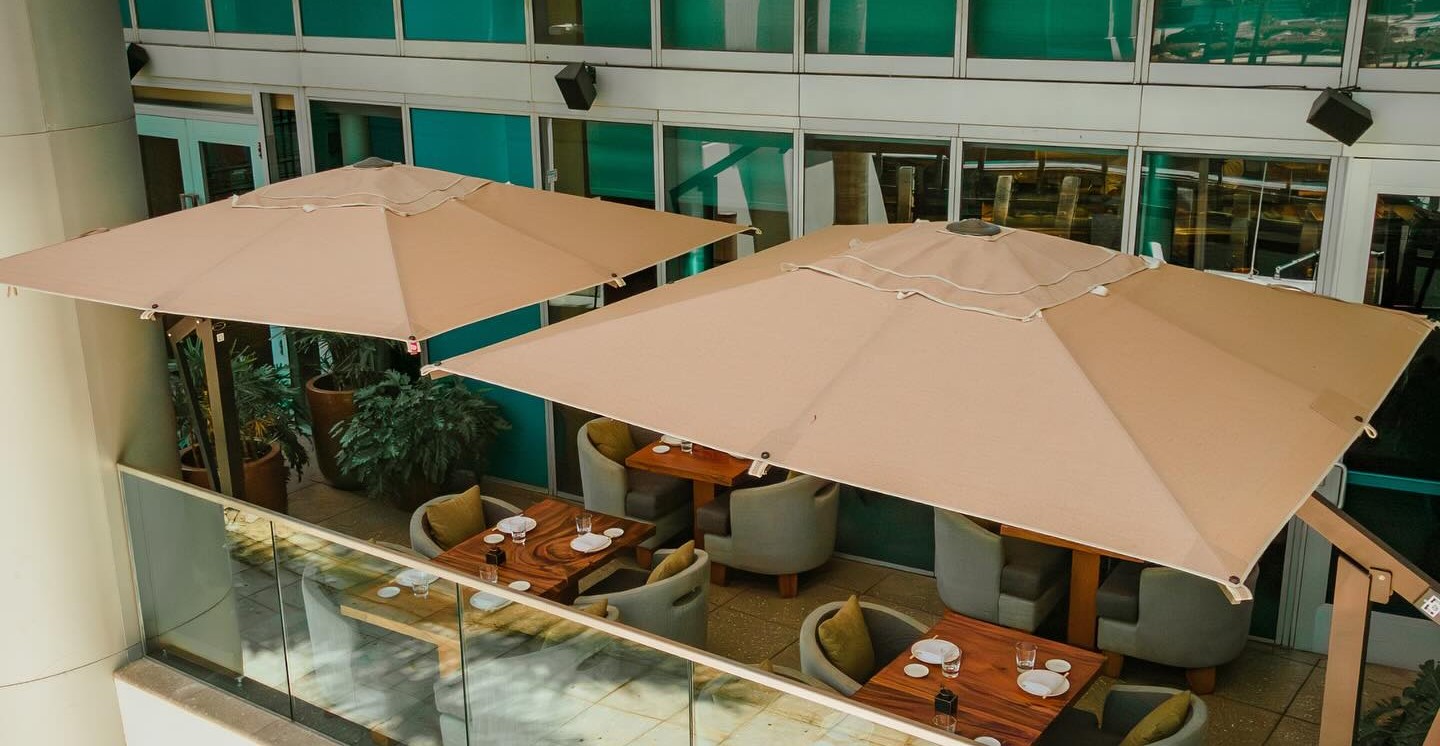
Outdoor dining areas, courtyards, rooftops, public squares, and hospitality spaces may serve very different purposes, but they share a common need: creating conditions that encourage people to stay.
In this context, shading systems can also take on an urban role. Their flexibility makes it possible to adapt a space without necessarily transforming it permanently, responding to different seasons, uses, and needs.
Shade becomes a resource to be designed and distributed.
It is not, of course, a solution to climate change. But it can be one of the tools that help cities remain comfortable and usable as the climate changes.
What if the real luxury were living well outdoors?
For a long time, outdoor luxury has been associated with exclusivity: generous spaces, precious materials, sophisticated furnishings, and spectacular settings.
Today, that definition may include something else. Perhaps luxury can also mean having an outdoor space that we can genuinely live in.
Not simply look through a window, cross on the way to the pool, or use during the few hours when temperature and weather conditions happen to allow it. But actually inhabit it, with the same ease and spontaneity we bring to indoor spaces.
It is a question of comfort, certainly, but also of time. The longer we can use a space, the more value we can draw from it. An outdoor area can create new opportunities to gather, extend the season in which it can be enjoyed, and turn an underused surface into a meaningful part of everyday life.
From this perspective, shade takes on a different meaning too. It is what allows a space to be used at different times, in different seasons, and under different conditions.
This is where design meets a less obvious, but equally interesting, form of sustainability: making better use of what we already have.
Because designing a more sustainable outdoor space can also mean this. Asking how a space can be used more effectively, how it can become more flexible, and how it can become a genuine part of everyday life.
A new way to think about sustainable outdoor design
The starting point for rethinking sustainability in outdoor design is to stop considering it only in terms of quantity.
Returning to the question we started with means broadening the perspective. How can an umbrella be sustainable? There is no single answer contained in materials, technologies, or product features. Instead, sustainability emerges from the relationship between an object and the larger system it becomes part of.
An umbrella can help manage solar exposure and reduce reliance on mechanical cooling. It can be designed to last, maintained over time, and adapted as needs change. It can make private and shared spaces more comfortable. And it can expand the ways in which an outdoor environment can be used.
These are different perspectives, but together they suggest a broader way of understanding sustainability. One that looks not only at how a product is made, but also at how long it lasts, what role it plays, which resources it can help preserve, and what value it can generate over time.
An umbrella can be many things. But when considered within a broader vision, it can also contribute to a different way of thinking about outdoor spaces. And it is in this combination of choices that the idea of sustainability becomes broader.
Perhaps this is where the future of outdoor design should begin: with the ability to create spaces that are smarter, more enduring, and better suited to the way we actually live.
A vision in which designing also means anticipating, adapting, preserving, and making better use of what we already have.
Because sustainability, in the future of outdoor design, will not be a feature added to a project. It will be the way we learn to design it. And that awareness could become one of the most interesting forms of innovation in outdoor design.