Outdoor living in autumn: the pleasure of being outside
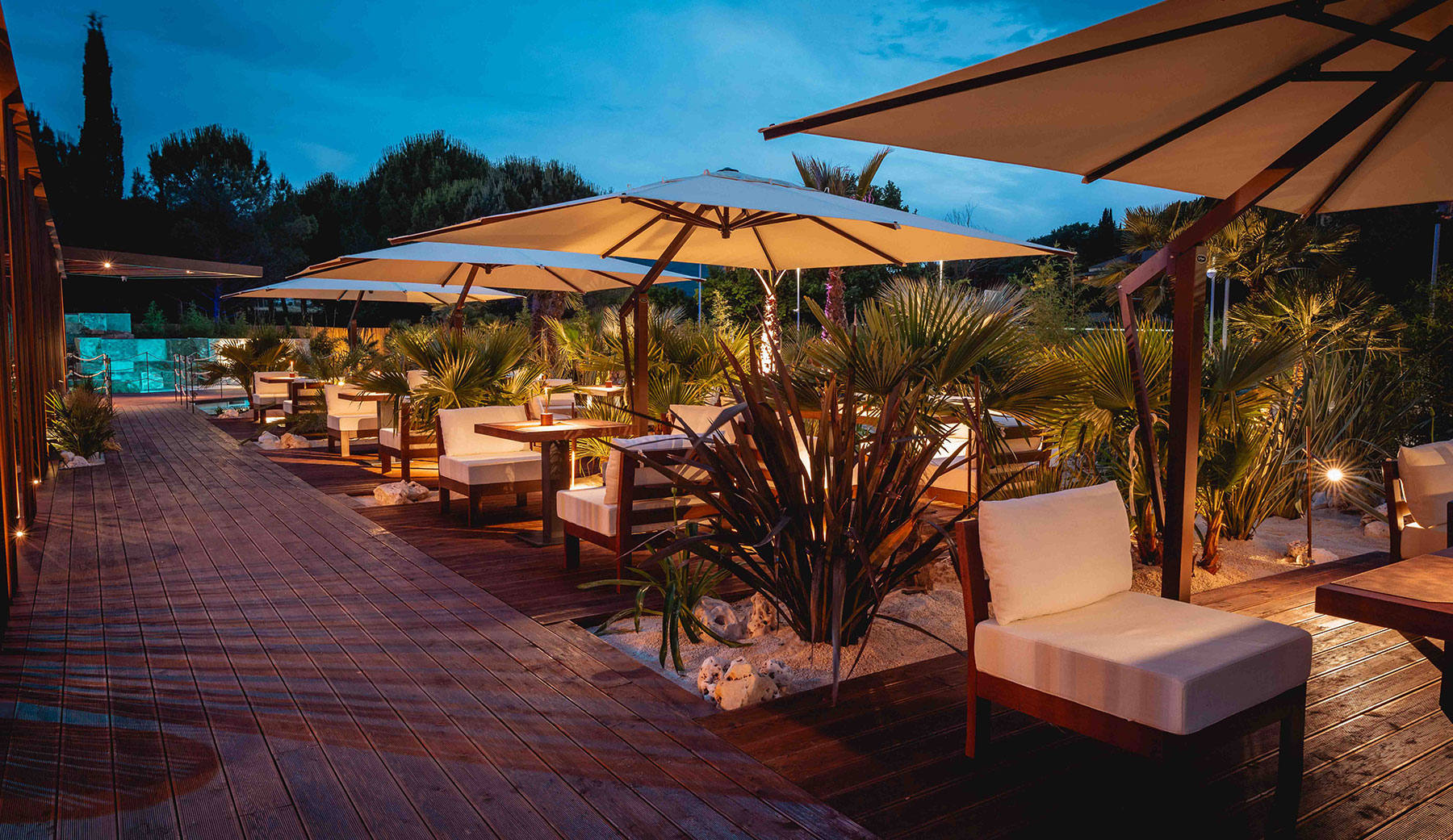
Autumn changes the way we experience the spaces around us. The light becomes softer, the temperatures invite us to slow down, and the landscape takes on new shades. But the end of summer does not necessarily have to mean the end of outdoor living.
A garden, terrace or patio can continue to be enjoyed as the seasons change. Especially when it is designed to provide comfort and accommodate different moments throughout the day.
In this context, even a parasol takes on a broader meaning. It can help define an area, alter the way a space is perceived and create the conditions to pause, relax and spend more time outside.
Talking about outdoor living also means asking how an outdoor space can contribute to a sense of wellbeing. Because what we gain from spending time outside depends not only on being outdoors, but also on how we perceive and experience the place around us.
Wellbeing begins outdoors
The relationship between our surroundings and wellbeing has long been the subject of research. Environmental psychology explores precisely how the spaces around us can influence emotions and behaviour.
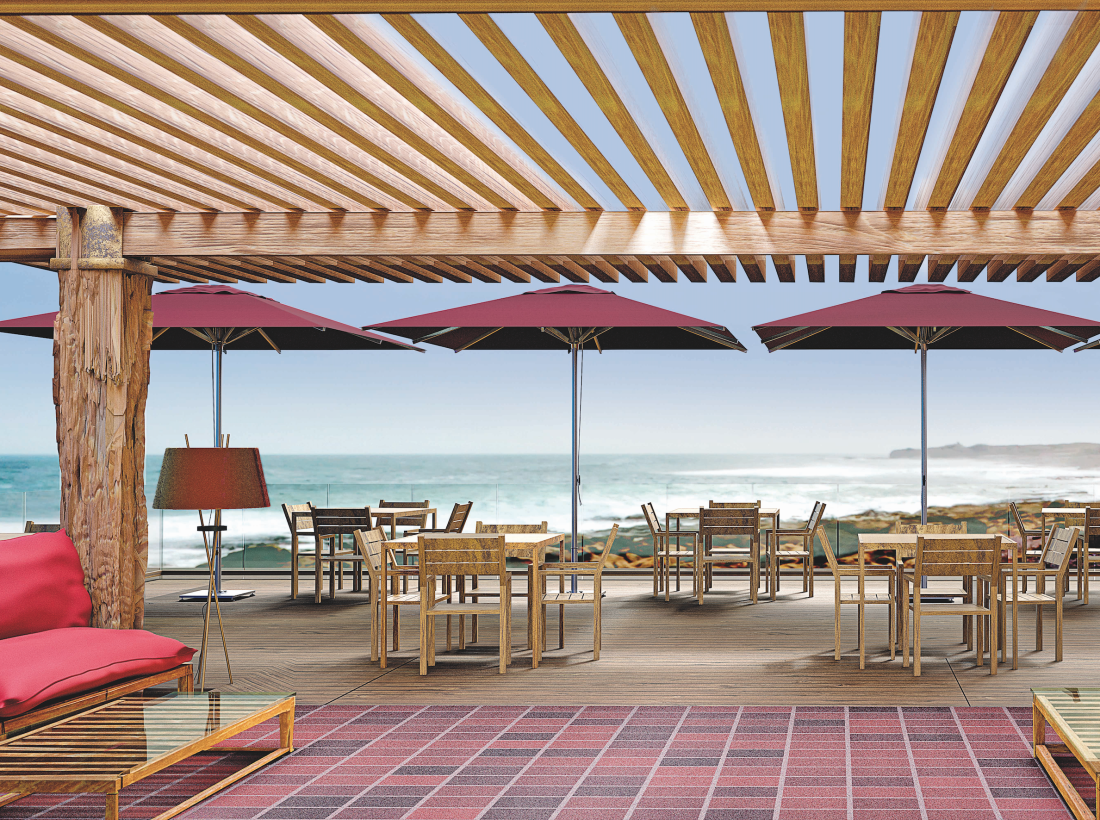
The way we perceive a space depends on many different elements: light, materials, vegetation, proportions and colour. The shades we choose for furnishings and fabrics can help define the atmosphere of a setting and influence the way we experience it. Discover how fabric colours shape the mood of outdoor spaces.
The colour of shade: how fabric tones shape the mood of outdoor spaces
But there is another equally important aspect: the quality of the environment in which this experience takes place.
Not all spaces are experienced in the same way. A fully exposed garden, without shaded areas or elements that provide a sense of protection, may be beautiful to look at, but it does not necessarily invite us to stay. By contrast, a setting that creates comfort, balance and a certain sense of intimacy can become somewhere we want to spend more time.
This is where outdoor wellbeing meets outdoor design.
Wellbeing can also be supported by the way we shape our relationship with nature.
Breakfast outdoors, a few pages of a book, a conversation, a moment to pause between two commitments. These are simple experiences, but the way we perceive them can change considerably depending on the environment that surrounds them.
Under a parasol, outdoor living feels different
When thinking about a garden or terrace, the question should not simply be how we want the space to look, but how we want to feel when we experience it.
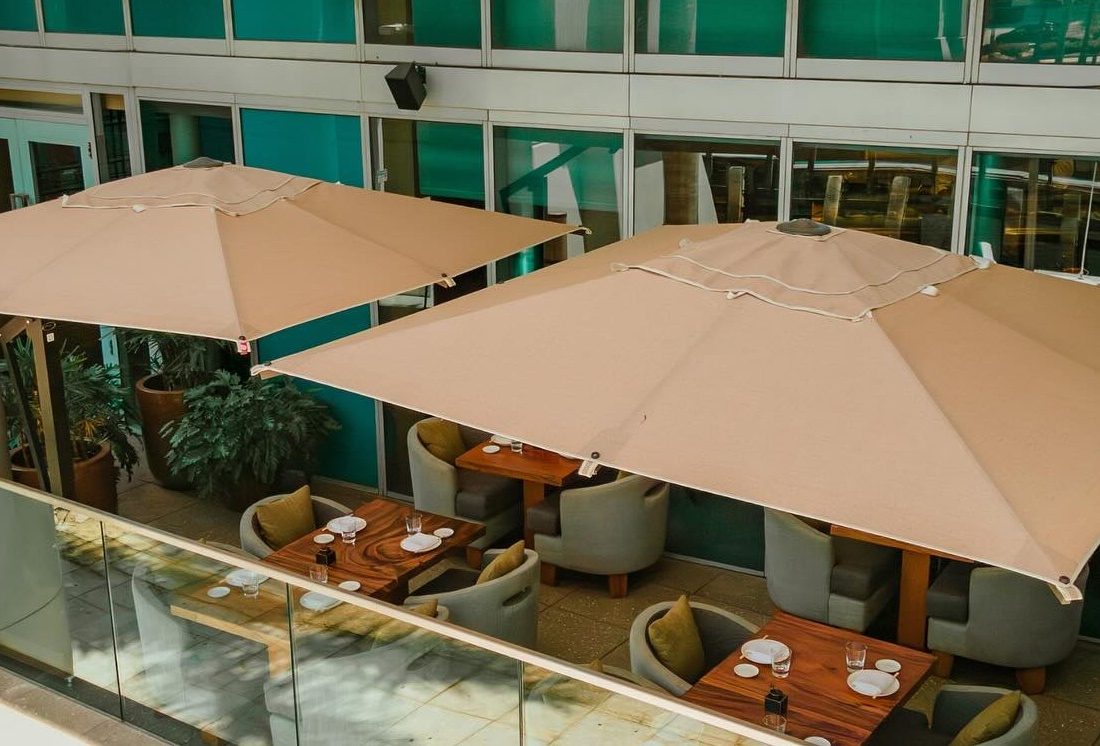
From this perspective, seemingly functional elements can take on a broader role. A parasol plays a particular role in transforming the experience of an outdoor space.
Its most obvious function is to provide shade and protection from direct sunlight. But its presence also produces a subtler effect. It defines an area within the space and changes the way it is perceived.
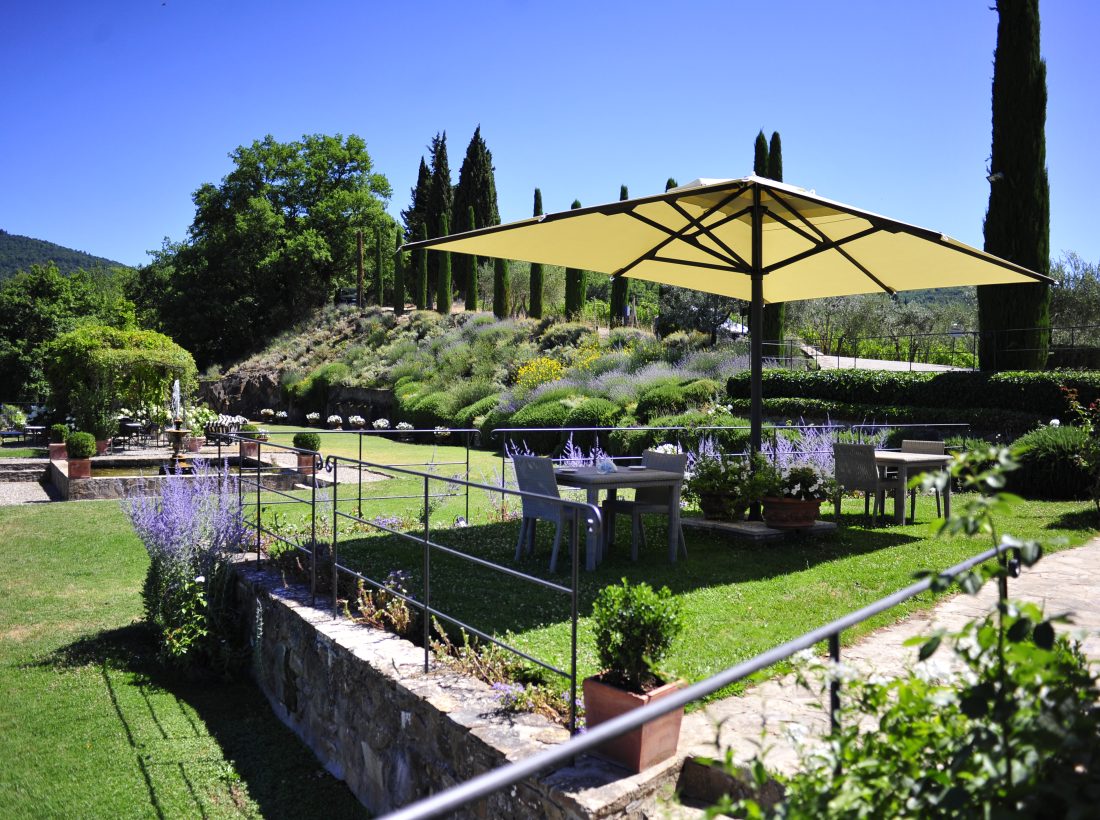
Under a parasol, part of a garden can feel more intimate and clearly defined. It creates a kind of micro-environment where we can sit, talk, read or simply spend a few moments without feeling completely exposed to our surroundings.
Shade is not simply a functional response to a practical need. It is also a tool for creating comfort and atmosphere.
A sense of protection can make a setting feel more welcoming. A canopy can help distinguish one area from another. Our connection with the landscape remains, but it is experienced through a more intimate dimension.
It is a question of balance: between openness and protection, nature and comfort, space and intimacy.
And it is precisely this balance that makes the role of a parasol in garden and outdoor space design so interesting.
Autumn and the pleasure of slowing down outdoors
In summer, living outside feels almost effortless. The garden becomes the setting for dinner, the terrace a place for aperitifs, and the poolside the centre of the day.
Autumn changes these habits, but not necessarily our desire to spend time outside. It is not a time to give up outdoor living, but to rediscover it through new rituals.
Even a short pause can take on a different meaning when it is spent outside.
This is where comfort becomes even more important.
As temperatures change and days grow shorter, the possibility of creating a sheltered and welcoming area can make a difference to the way we experience a space. A parasol can help maintain a sense of continuity between summer and autumn, supporting a different way of enjoying life outside.
The aim is not to artificially extend summer, but to discover a new way of being outdoors.
When the parasol becomes part of the design
If a garden, terrace or patio is considered a true extension of the home, the elements that determine its comfort should also be integrated into the overall design.
In this sense, a parasol can become much more than a functional accessory.
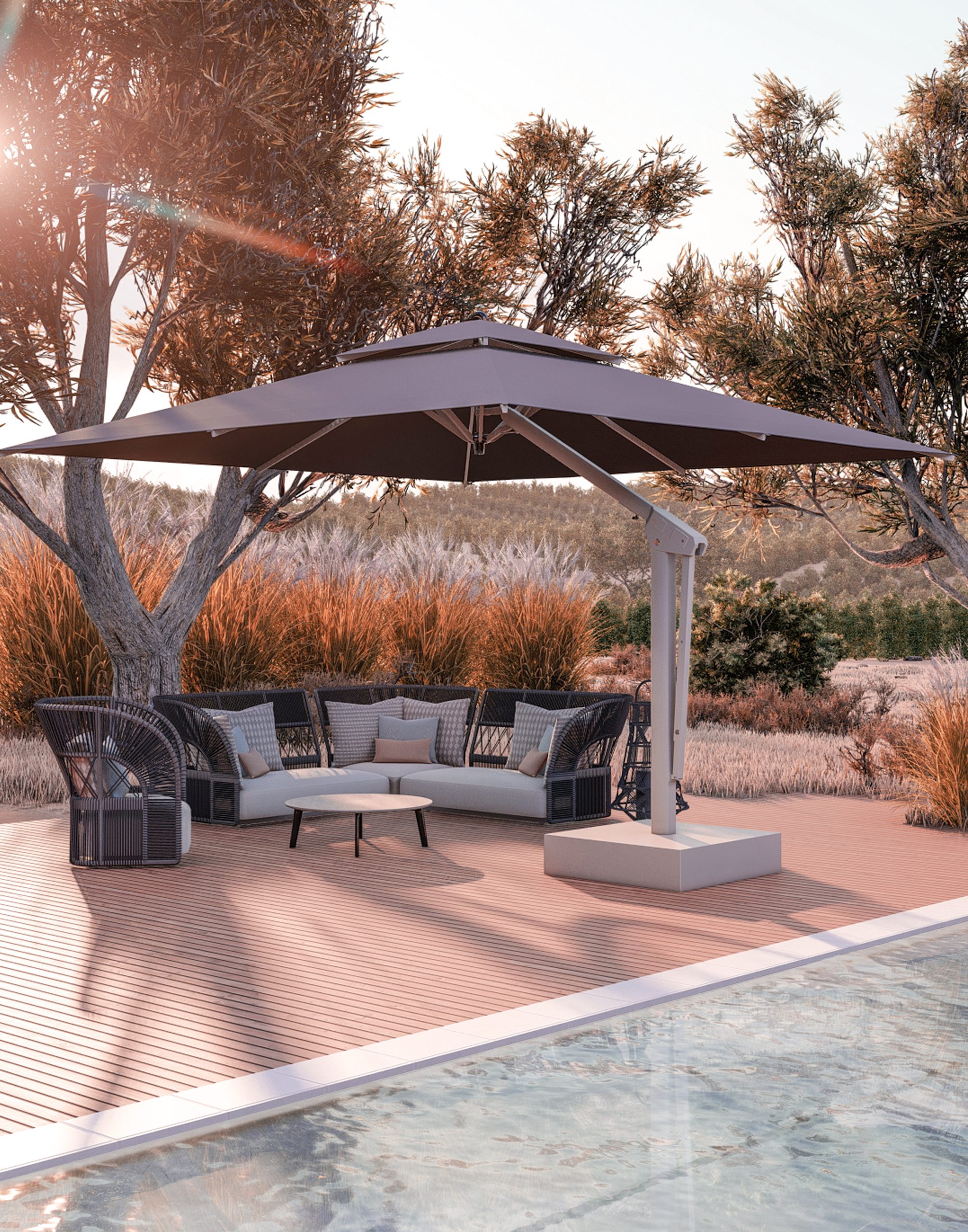
Its position, proportions and relationship with the furnishings and surrounding architecture all contribute to defining the identity of a space. It can delineate a dining area, create a lounge setting, complement a pool or establish a place to pause within a garden.
Its value therefore lies not only in the function it performs, but also in its ability to organise a space without enclosing it.
Unlike a permanent structure, a parasol can define an area while preserving visual continuity with the surrounding landscape. It does not create a room in the traditional sense, but it suggests one.
A room without walls, where architecture meets nature and design contributes to making everyday life outside more enjoyable.
Designing for comfort: from shade to a sense of wellbeing
Designing a space outside means considering not only its aesthetics, but also all the conditions that determine how comfortable and liveable it is.
Exposure to light, orientation, wind, privacy, vegetation, the arrangement of furnishings and the possibility of creating sheltered areas are all elements that can influence the way we perceive an environment.
Shade plays a particular role because it allows us to modulate our relationship with light and the surrounding landscape.
A parasol that is thoughtfully integrated into the design can help create an area where comfort is immediately perceptible. Beneath its canopy, the character of the setting changes. Light is filtered, the area feels more defined and spending time there can take on a more intimate quality.
When an environment makes us feel protected, comfortable and free to pause, we are more likely to choose to spend time there.
This is where design meets wellbeing: designing does not simply mean deciding how a space should look, but also imagining how we want to feel when we experience it.
Living outdoors beyond summer
The true value of a garden or terrace perhaps becomes most apparent when summer comes to an end and we find ourselves asking. Do we still want to spend time outside?
A space designed with wellbeing in mind can answer yes.
Because outdoor living does not depend solely on the season, but on the quality of the environment we have created around us. On its ability to adapt to different moments of the day, accommodate different activities and provide comfort without compromising our connection with nature.
Autumn therefore becomes an opportunity to rediscover the spaces around us in a different light. Slower, more intimate and more personal.
Beneath a parasol, a terrace can become a more intimate setting, while a patio can feel like a natural extension of the living area.
And perhaps this is the real point: wellbeing outdoors is not simply about spending more time outside. It is about creating places where we genuinely want to stay.
Transform your outdoor space with Poggesi and make it a place you do not simply look at, but one you truly want to experience, season after season.