Summer 2026 outdoor trends: colours, textures and parasols
Every April, the Salone del Mobile in Milan captures where design is heading. Not only indoors: in recent years, the boundary between interior and exterior has dissolved, and the trends emerging across the Design Week pavilions inevitably extend to terraces, patios, gardens and poolside areas in hotels, resorts and restaurants worldwide.
The 2026 edition revolves around a theme that speaks directly to those designing high-end outdoor environments: “A Matter of Salone”. A concept that places material at the core of design: its origin, its meaning, and its expressive potential. The focus shifts beyond the finished product to the process itself: textures, fabrics and colors chosen with intention.
For Poggesi, which has been designing and manufacturing professional umbrellas for decades, where every detail reflects both technical precision and aesthetic vision, this perspective feels particularly relevant. So what do the outdoor living trends for 2026 reveal, and how can they translate into concrete design choices for hospitality spaces?
What Salone del Mobile 2026 tells us about colours, textures and outdoor spaces
The Salone del Mobile 2026 confirms a direction that has been gaining momentum. Outdoor space is no longer a secondary area, but a natural extension of architecture and contemporary living. It is an environment to be designed with the same level of intention as interiors, where aesthetics, comfort and performance coexist in balance.
Across immersive installations, increasingly cross-disciplinary collections, and a clear blurring of the indoor–outdoor boundary, a precise vision of what will define outdoor living in summer 2026 emerges:
- warmer, more identity-driven color palettes;
- materials with greater tactile depth and visual richness;
- forms that interact with space in a fluid, architectural way.
This evolving design language applies equally to residential and hospitality settings, redefining how we experience terraces, gardens and alfresco dining spaces. Outdoor environments have definitively moved beyond seasonality, establishing themselves as a core component of contemporary design, shaping the choices of private clients, architects and professionals across the hospitality and F&B sectors.
Colours and textures shaping exterior spaces
The outdoor colour palette for gardens, terraces, and patios
If recent years have been defined by neutral minimalism, 2026 marks a clear shift. Color is making a confident return: less decorative, more evocative, and deeply connected to its surroundings.
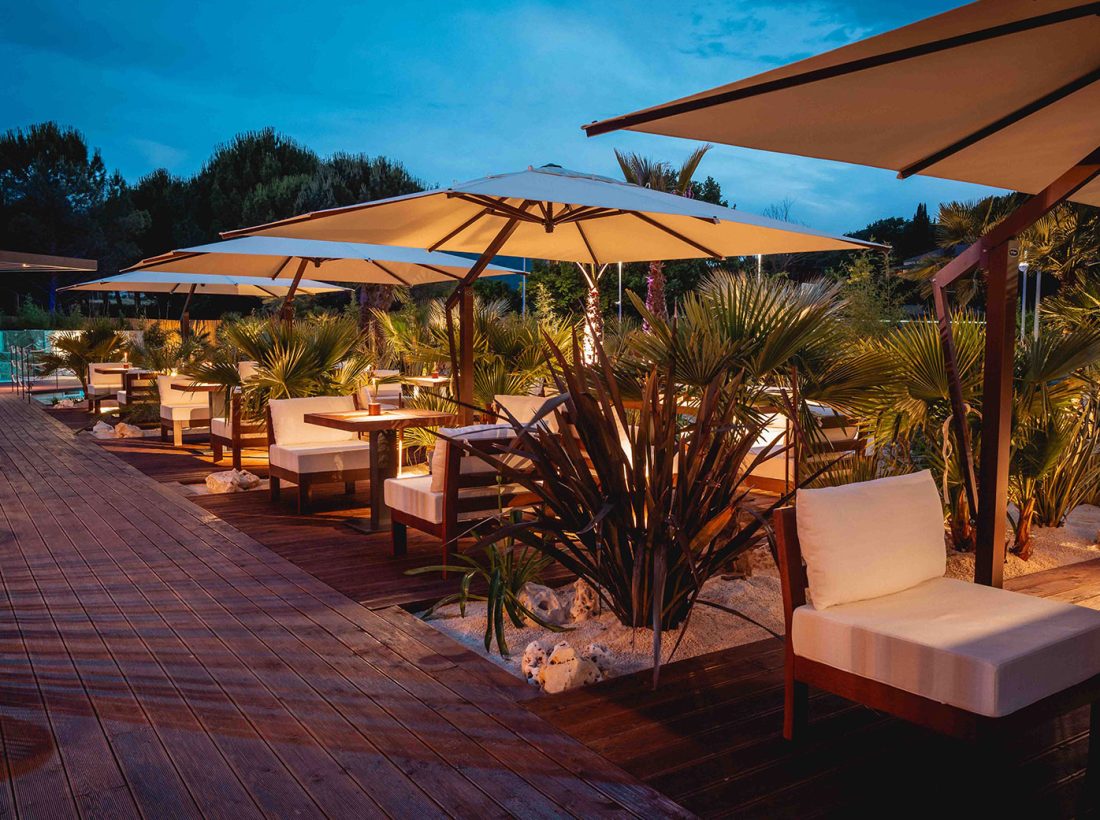
Outdoor palettes are warming up, drawing inspiration from natural landscapes and Mediterranean atmospheres. Terracotta, sage green, warm sand, rust and ochre: tones that reconnect spaces with their environment, performing equally well under the bright August sun or in the softer light of an evening terrace.
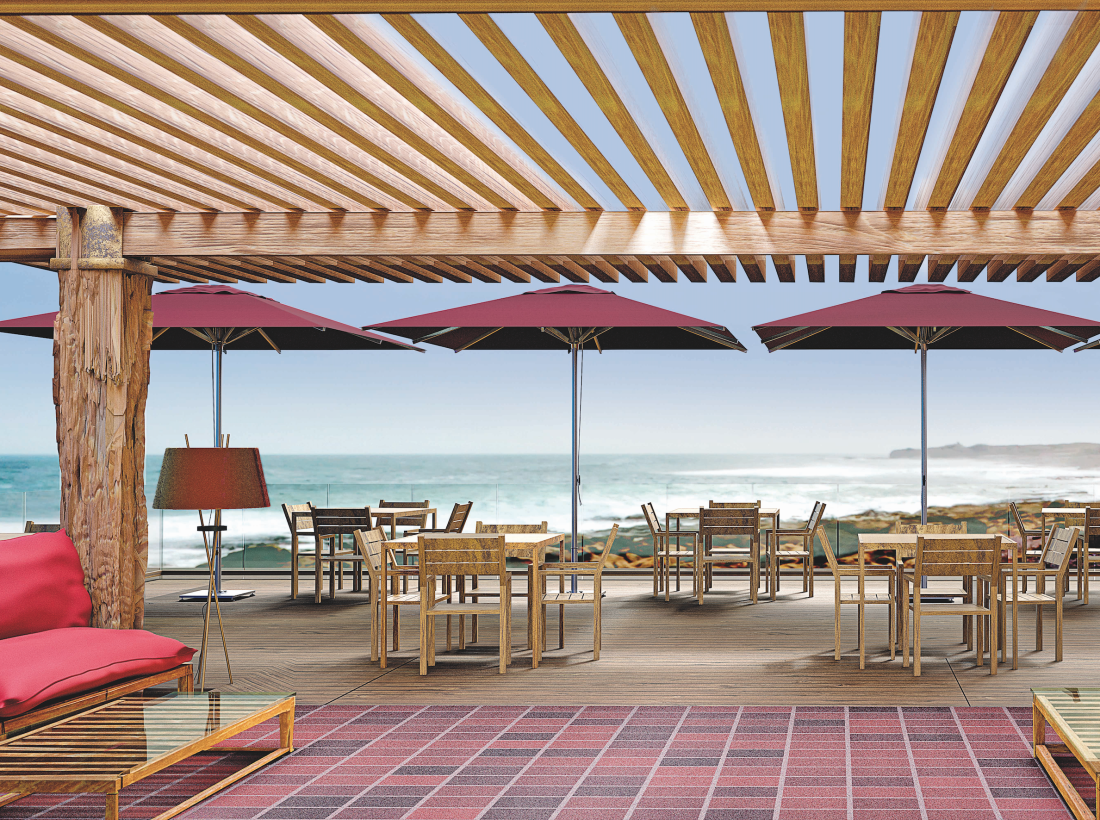
This return to earthy tones is balanced by more expressive accents: burgundy, deep teal, petrol green, and burnt orange reminiscent of Tuscan clay, reinterpreted with a contemporary edge. The key is no longer choosing between natural and bold, but combining both to create layered, distinctive environments.
For those managing a boutique hotel, a restaurant with outdoor seating, a resort or a countryside retreat, this opens up an important consideration. The color of a parasol is not a decorative detail. It is often the first element guests perceive from the outside, shaping the visual identity of the space. Selecting a palette that aligns with interiors and with the overall concept of the property is now a true design decision.
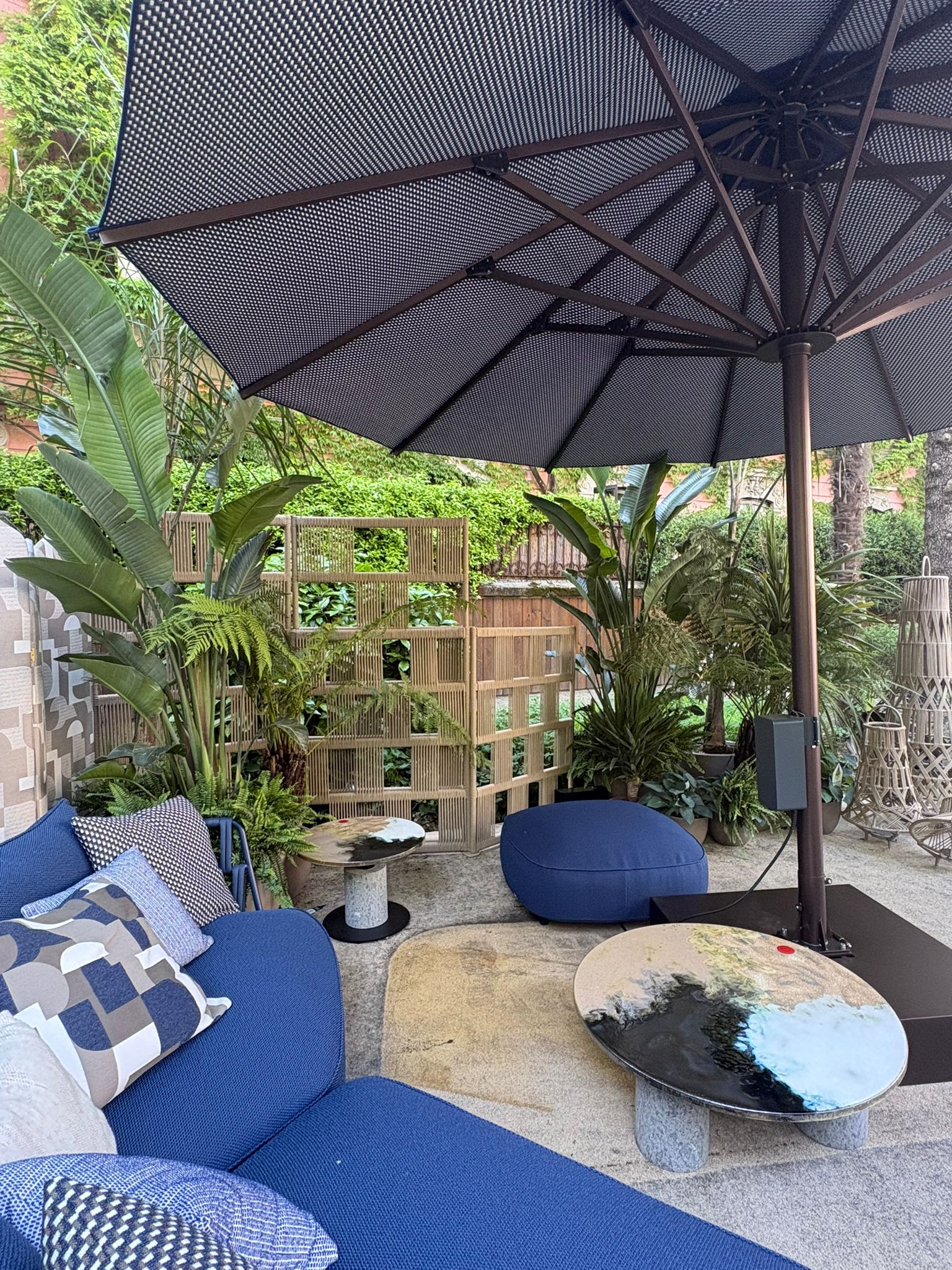
Warm, enveloping tones convey stability and understated elegance, integrating seamlessly into both urban architecture and natural settings. In hospitality design, they represent a strategic choice, helping create sophisticated, welcoming environments with a strong sensory appeal.
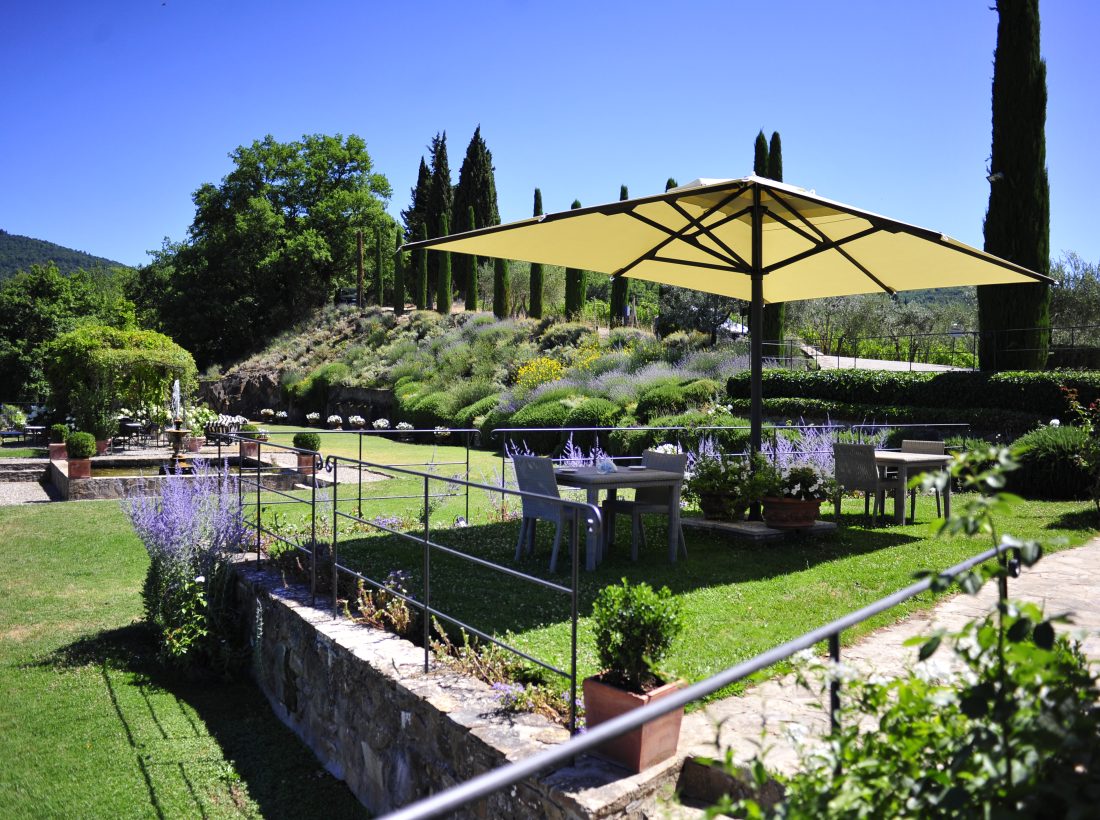
Palettes that move closer to the botanical world, meanwhile, allow spaces to merge with their surroundings. In residential settings, these tones create a sense of continuity and calm; in hospitality, they become tools for building immersive environments in keeping with the property’s context.
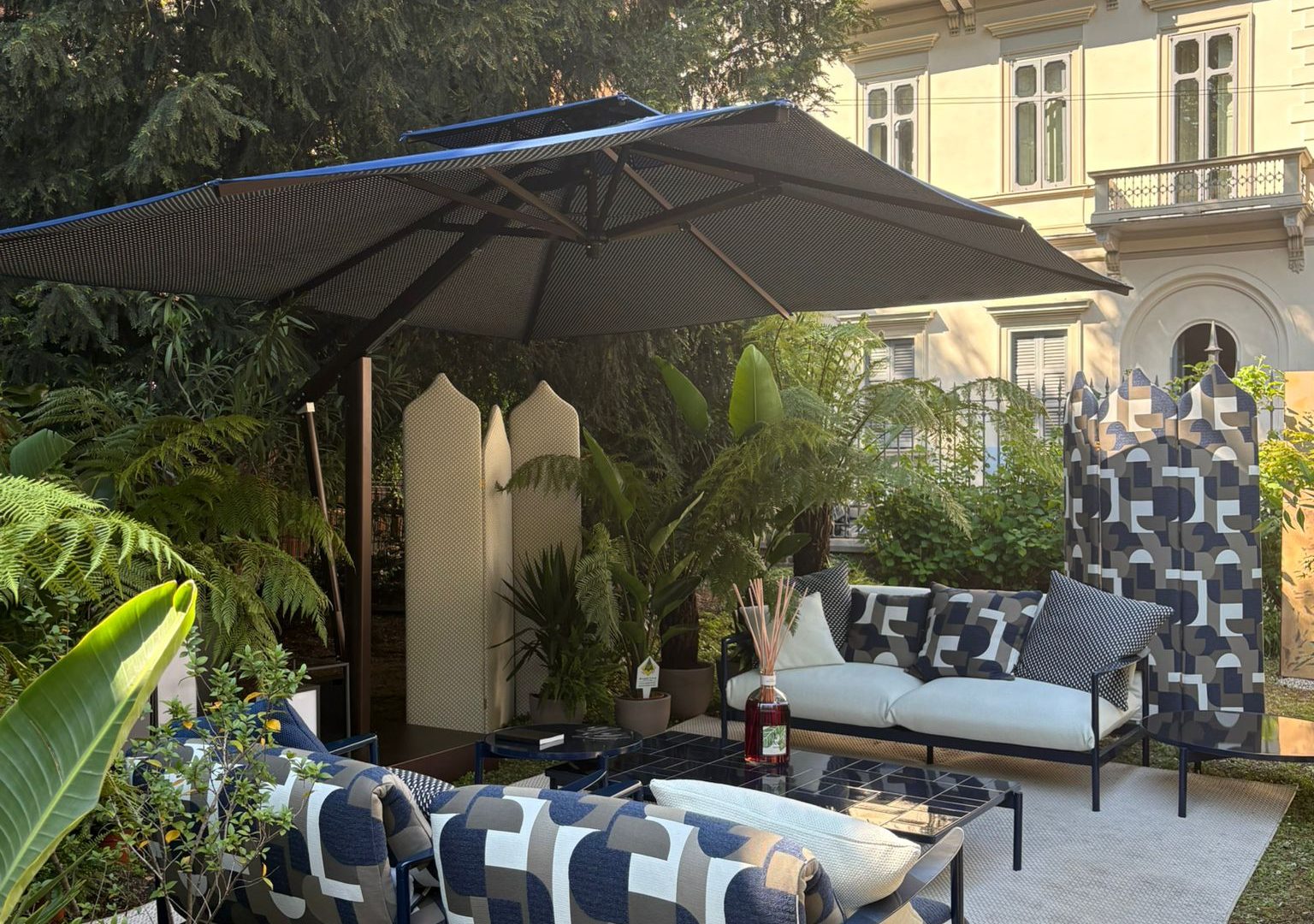
For outdoor projects seeking freshness, elegance and a sense of escape, deeper blues also play a key role. Often paired with subtle graphic patterns, they are particularly effective in rooftop venues, resorts and panoramic terraces, where visual impact and atmosphere go hand in hand.
The most popular colours for outdoor use in 2026
- Sage green and moss green: elegant, understated, ideal for natural or rural-chic settings.
- Terracotta and rust: warm, Mediterranean, perfect for properties with a strong visual identity.
- Sand and ivory: versatile, luminous, compatible with almost any scheme.
- Burgundy and teal: for those seeking a distinctive, memorable outdoor presence.
- Anthracite: the professional classic that never dates, today reinterpreted in increasingly refined matte finishes.
Exploring these palettes for a residential outdoor space? In this article, we take an in-depth look at the design trends for outdoor living spaces in 2026.
Texture: the tactile dimension of outdoor design
If colour sets the mood, texture determines its depth. The second major trend emerging from the Salone del Mobile 2026 highlights a more material-driven approach to outdoor design, where perceived quality is expressed through surfaces, texture, and finishes.
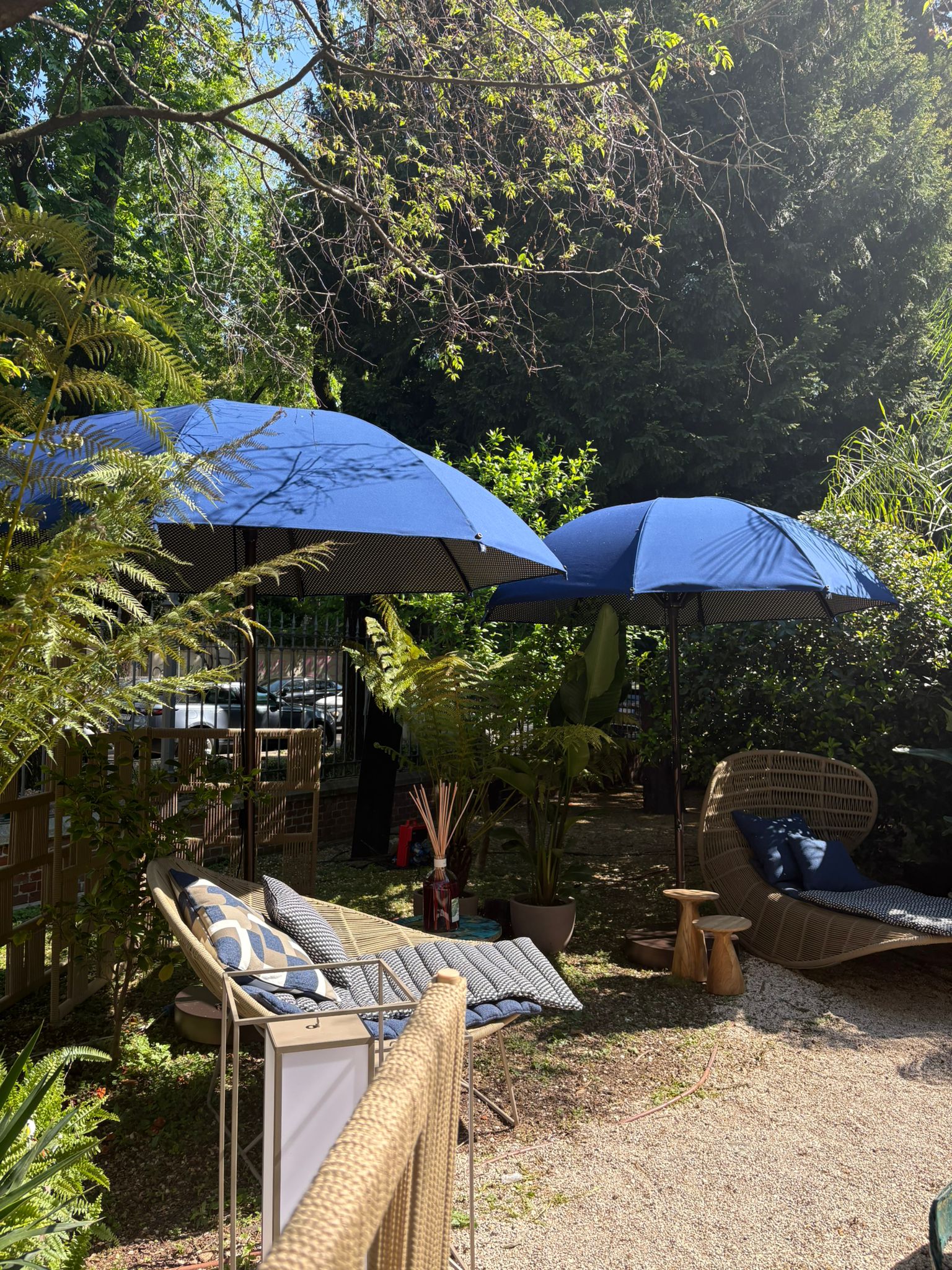
Today’s design landscape increasingly values materials that tell a story. New generations of outdoor fabrics are evolving toward a more refined aesthetic: linen-look finishes, structured canvas, and surfaces that are soft to the touch yet highly durable. This evolution brings the same level of sophistication found indoors into exterior environments, elevating the overall spatial experience.
Three-dimensionality is becoming central. Ropes, woven details and textures inspired by natural fibers introduce depth and visual movement, interacting dynamically with light throughout the day. This is particularly relevant in hospitality settings, where visual impact plays a key role in shaping the guest experience.
Alongside this, the search for authenticity continues to grow. Materials and finishes increasingly evoke the natural world, even when achieved through advanced technical innovation. The result is an outdoor environment that feels warmer, more lived-in and more inviting.
For a professional umbrella, this leads to a very specific question: which fabric to choose? The answer is never purely technical. A heavy canvas conveys solidity and tradition; a linen-effect textile suggests Mediterranean lightness and ease. The fabric of a parasol is the first surface a guest sees on arrival: it is worth having something to say.
Shapes and designs: architectural lightness and new proportions
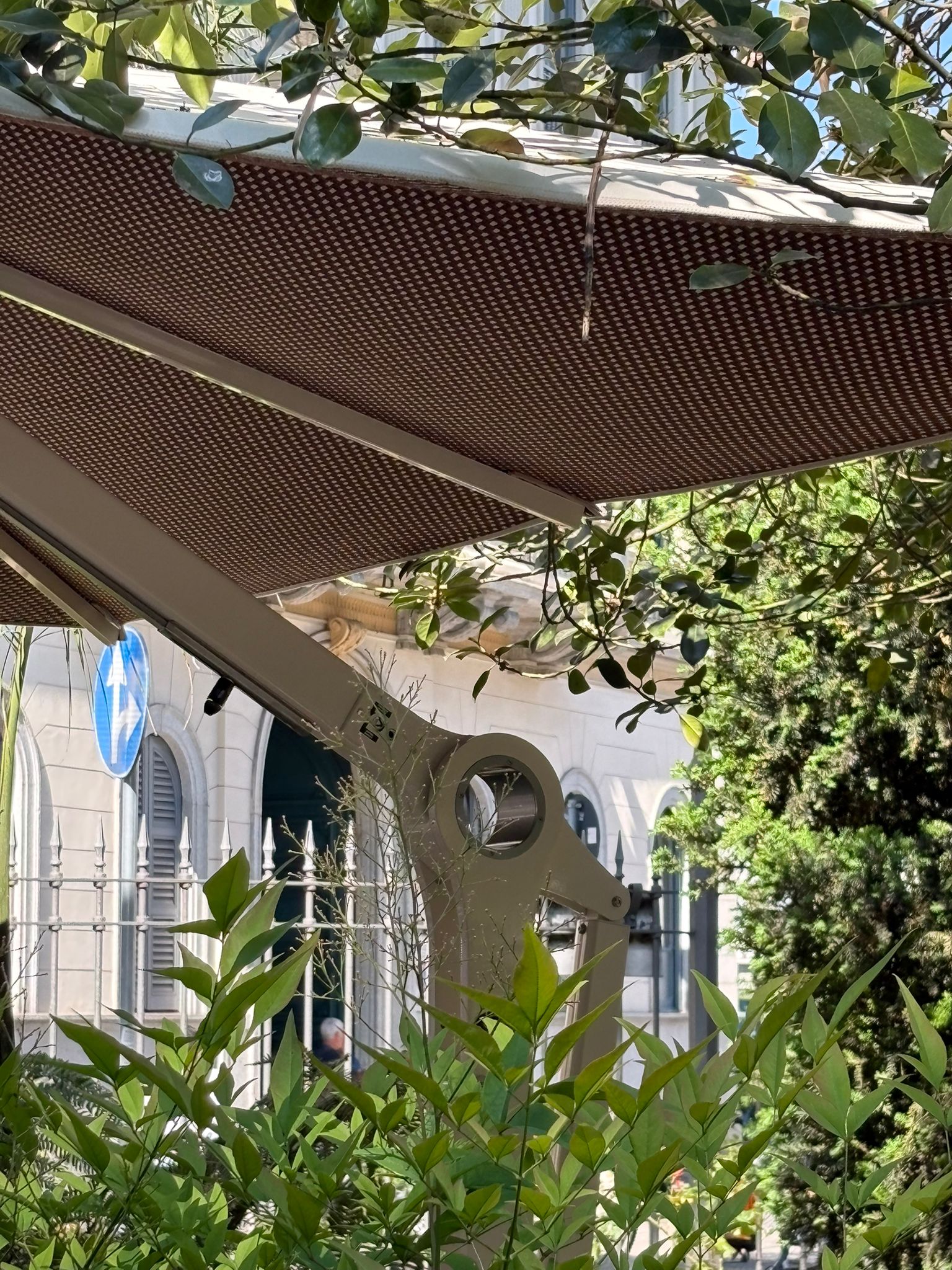
Alongside colours and materials, Salone del Mobile 2026 highlights a third major theme: the evolution of form. Rigid geometries give way to softer, more fluid lines capable of engaging with the surrounding environment.
Structures become visually lighter and lines grow more essential, almost suspended, with a strong focus on proportion and balance. In outdoor shading solutions, this translates into elements that define space without overwhelming it, contributing to the overall harmony of the project.
At the same time, demand is growing for more scenographic solutions. Large-scale shade canopies that transform terraces and patios into true open-air architecture. This is particularly relevant in hospitality design, where outdoor spaces increasingly take center stage in the guest experience.
Design is becoming ever more dynamic. Modular and configurable systems allow spaces to adapt to different needs and uses. A concrete response to the requirements of restaurants, hotels and multi-functional venues.
Residential vs hospitality outdoor design: what’s changing?
One of the most interesting insights emerging from the Salone del Mobile 2026 is the growing convergence between residential and hospitality design.
Private homes are adopting contract-level solutions, focusing on quality, durability and bespoke design. At the same time, hospitality spaces are moving toward a more domestic aesthetic: warmer, more welcoming, and designed to make guests feel at ease.
In residential settings, outdoor space becomes intimate and personal, designed for everyday wellbeing. In hospitality, it plays a strategic role: shaping the identity of the venue, enhancing memorability and becoming a key element of brand perception.
Luxury hospitality umbrellas: designing the shade to elevate the guest experience
The result is a shared design language. While scale and function may differ, the goal remains the same: creating experiences, not just spaces.
The outdoor space as a room: the continuum that changes everything
One of the clearest signals from Salone del Mobile 2026 is a shift in how space is conceived. The boundary between indoor and outdoor has effectively disappeared. Exterior areas in hotels and restaurants are now fully realized environments, designed with the same care and ambition as interiors.
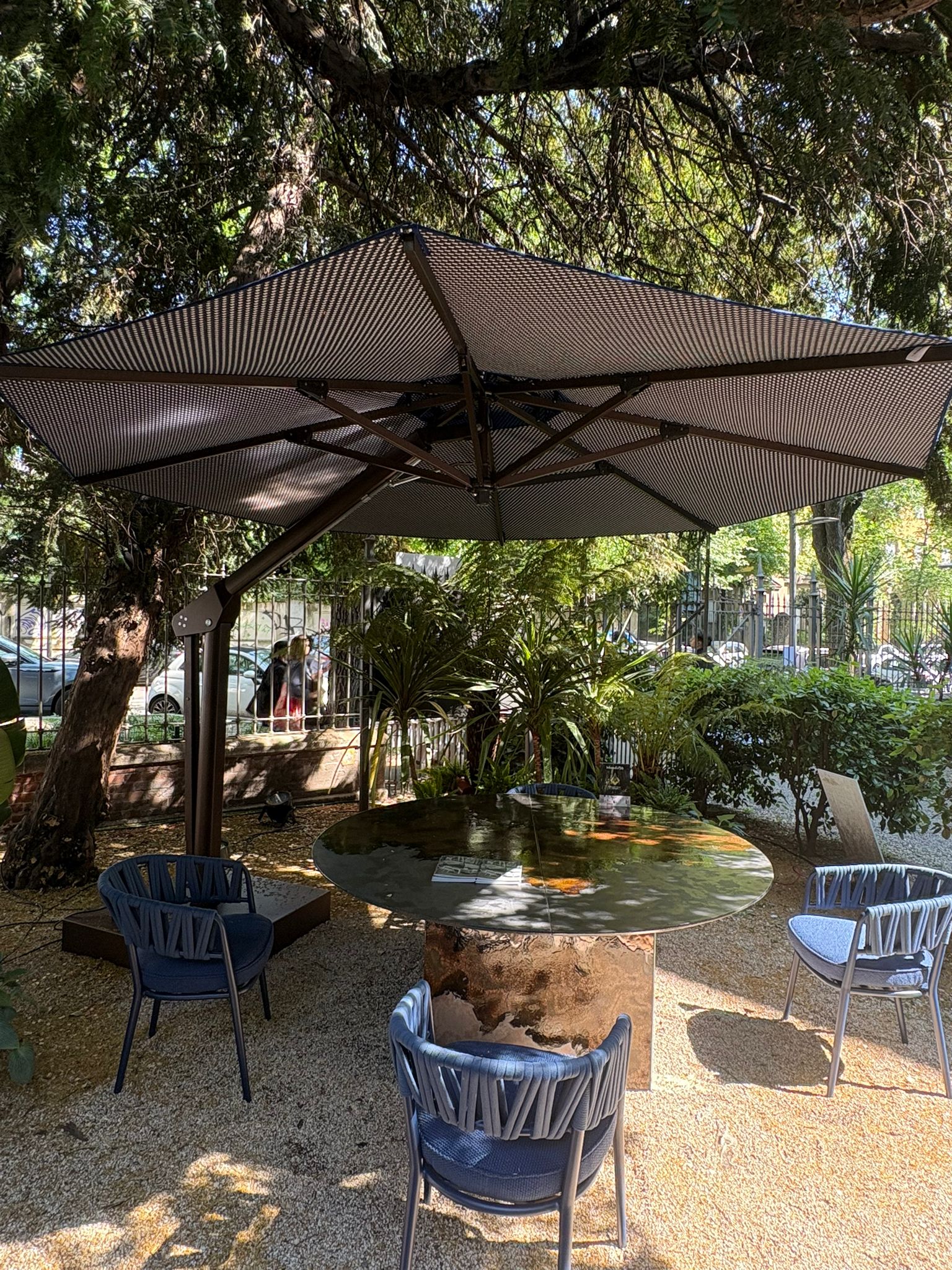
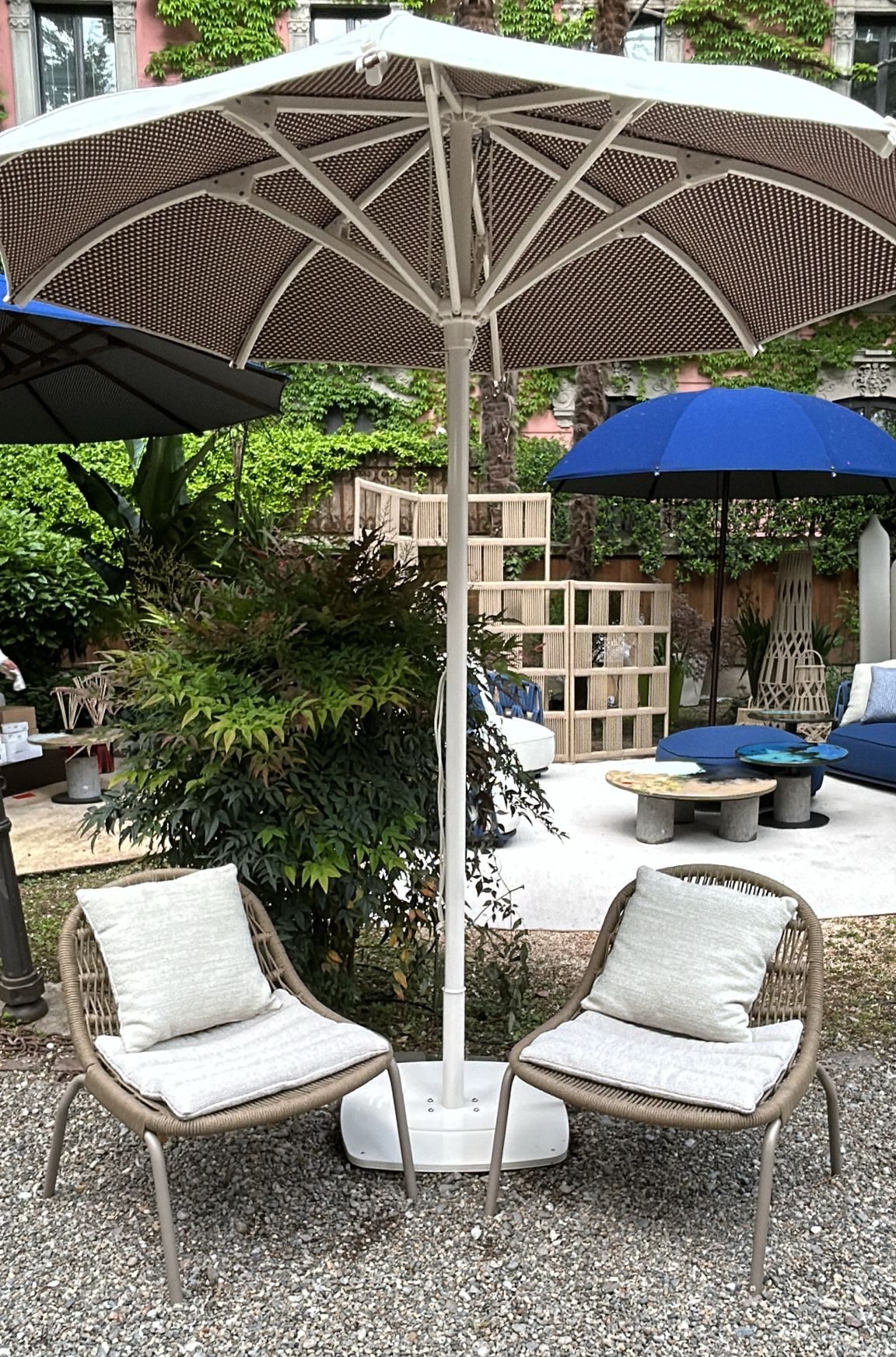
This has direct implications for shading solutions. In this context, a parasol is no longer just sun protection: it becomes an architectural element. It defines volume, creates perceived boundaries and establishes rhythm within the space.
Cantilever umbrellas, which free up the central area, are ideal for creating the feeling of an open-air room. Integrated lighting systems extend usability into the evening, without the need for additional structures.
From the 2026 Design Week also emerges a strong trend toward modularity and customization. Furniture is no longer static: it is flexible, adaptable. The same principle applies to professional umbrellas: the ability to customize structure, fabric, color, accessories and dimensions responds to a growing need for identity and design coherence.
The parasol as an architectural feature
Within this evolving landscape, traditionally technical elements like parasols take on a new role. No longer just functional solutions, they become integral components of the design project.
A parasol becomes, first, a visual focal point, capable of defining space and capturing attention. Contemporary colour palettes and high-quality fabrics allow it to integrate seamlessly into the overall design concept, or stand out as a distinctive feature.
At the same time, it becomes a tool of brand identity, particularly in hospitality settings. Colour, shape, and proportion contribute to building a recognisable image, coherent with the property’s brand positioning and with the experience it seeks to offer.
Finally, the umbrella plays a key role in shaping atmosphere. By filtering light, defining shaded areas and creating spatial rhythm, it directly influences comfort and the overall perception of the environment.
In line with the trends emerging from Salone del Mobile 2026, the most evolved outdoor solutions move towards a synthesis of aesthetics and performance, where every element is conceived to engage with the architecture and enhance the space it inhabits.
Reading the future of outdoor living
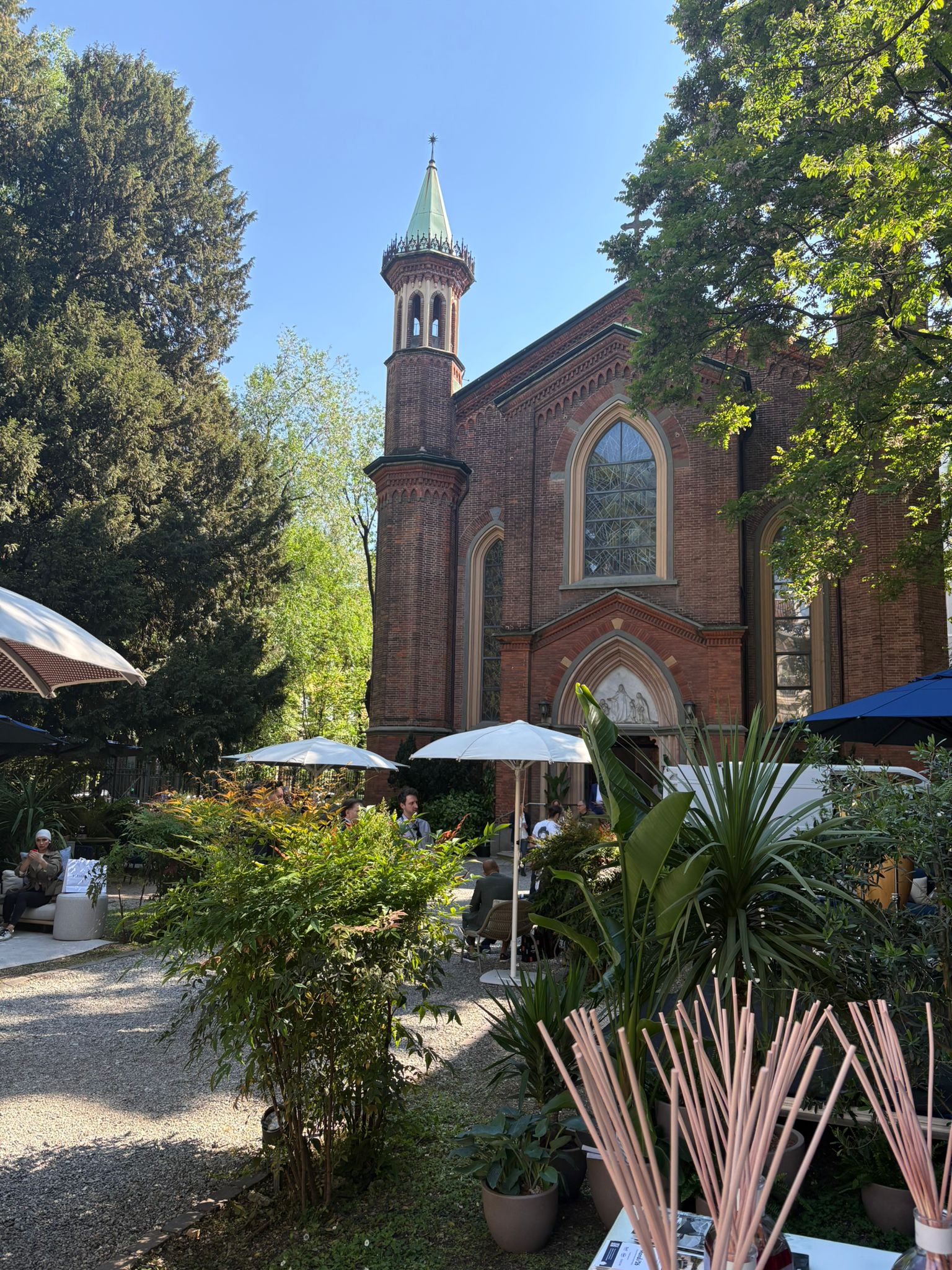
The trends emerging for summer 2026 tell a clear story of evolution. The outdoor space is becoming an identity-defining environment, designed to be lived authentically and continuously.
Colours that evoke landscape, materials that invite contact, forms that build light architectures. Every element contributes to a new balance between aesthetics and function.
The Salone del Mobile 2026 speaks of materials, process, and identity. Even a parasol, when thoughtfully chosen, can express all of these elements.
Outdoor trends of 2026 do not ask us to follow fashion. They ask us to design with intention: understanding why a colour is chosen, what a fabric communicates, and how a shading solution defines the space one intends to create.
To design today means to interpret, select and translate trends into coherent, lasting solutions. It is precisely in this ability to synthesize that the value of contemporary outdoor design lies.
Poggesi has been working for decades with hotels, resorts, restaurants and hospitality venues seeking outdoor space that reflect their identity. If you are rethinking your exterior spaces for summer 2026, we are here to help you find the right shade solution.